
When the IRS asks for a financial disclosure, it almost always means a Collection Information Statement: Form 433-A for individuals and the self-employed, or Form 433-B for businesses. You list your income, expenses, bank accounts, property and debts, sign under penalty of perjury, and the IRS uses the result to decide what you can pay. The rest of this guide covers what the forms contain, what you must prove, when a different kind of disclosure applies, and the mistakes that cost taxpayers the most.
TL;DR
- A financial disclosure to the IRS is usually Form 433-A (individuals) or Form 433-B (businesses), used to decide how you can pay a tax debt.
- The IRS tests your figures against its Collection Financial Standards and expects documents for your living expenses. Unproven numbers are a common reason requests are rejected.
- Foreign assets and unreported income can call for a different path, the IRS Voluntary Disclosure Practice. Talk to a tax professional before you submit anything in that situation.
- Refusing to disclose does not make the debt go away. It invites liens and levies.
- Submitting a financial statement is not the same as stopping collection. Know whether your proposal has been accepted for processing.
Table of Contents
- What “financial disclosure to the IRS” actually means
- The Collection Information Statement: Forms 433-A, 433-B and 433-F
- What a complete financial disclosure includes
- How the IRS decides what you can afford
- Voluntary disclosure: a different path for unreported income and foreign assets
- The other direction: when the IRS discloses your information
- Can you opt out by not disclosing?
- Seven mistakes that weaken a financial disclosure
- Our perspective
- Work with a CPA before you sign
- FAQ
- Sources
What “financial disclosure to the IRS” actually means
The phrase covers three different things, and people often mix them up.
- Collection financial disclosure. You owe tax and the IRS wants to see what you can afford. This is Form 433-A, 433-B or the shorter 433-F, and it is what most readers searching this phrase need.
- Voluntary disclosure. You have unreported income or foreign assets and want to come forward before the IRS finds them. This is a separate program with separate rules.
- Disclosure by the IRS. The IRS releasing your return information to someone else. This is tightly restricted, and it runs in your favor.
We will take each in turn, starting with the one that causes the most stress: the collection statement.
The Collection Information Statement: Forms 433-A, 433-B and 433-F
The IRS uses these forms to learn your current financial picture. According to Publication 1854, Form 433-A is used to obtain the current financial information needed to determine how a wage earner or self-employed individual can satisfy an outstanding tax liability. Publication 5059 gives the same guidance for Form 433-B, which covers businesses. There is also a shorter Form 433-F, which an IRS collection employee may use in some cases.
| Form | Who completes it | What it covers |
|---|---|---|
| 433-A | Wage earners and self-employed individuals | Household income, living expenses, bank accounts, investments, real estate, vehicles, business assets |
| 433-B | Businesses | Business income and expenses, accounts receivable, business assets, owners and officers |
| 433-F | Individuals, usually in a shorter form | Condensed income, expense and asset information |
The forms ask about every asset, foreign and domestic. That includes bank accounts, investments, digital assets such as cryptocurrency, real estate, vehicles and business assets. Leaving something off is not a harmless shortcut. You sign under penalty of perjury, so an incomplete statement can turn a payment-plan request into a much larger problem.
Use the current version. The current revision of Form 433-B is dated June 2026. Outdated forms or missing sections can mean rejection or long delays, so download the form from IRS.gov on the day you file rather than reusing a copy from an earlier case.
We have a plain-language walkthrough of the sections in our IRS Form 433 guide, and a chapter-style breakdown of Forms 433-A, 433-F and 433-B.
When the IRS will ask for one
You are most likely to see a request for a Collection Information Statement when you:
- ask for an installment agreement that is larger or longer than the streamlined options allow;
- ask to be placed in Currently Not Collectible status because paying would cause hardship;
- submit an Offer in Compromise, which is built on a detailed financial statement;
- are assigned to a revenue officer who needs to see what you own and earn;
- request a Collection Due Process hearing and want Appeals to consider alternatives.
On that last point, the instructions to Form 12153 do not require a financial statement with your initial hearing request. Still, sending one early gives Appeals what it needs to evaluate an installment agreement or other alternative from the start, which can speed up the case. Our page on the collection hold request and Form 12153 explains the 30-day window in more detail.
What a complete financial disclosure includes
Gather these before you open the form. Most delays come from missing paper, not from hard questions.
- Income: recent pay stubs, Social Security or pension statements, 1099s, rental income records, and for the self-employed, a profit and loss statement.
- Bank and investment accounts: statements for every account you own or control, including savings, brokerage, retirement and digital asset accounts.
- Real estate and vehicles: mortgage statements, current balances, property values and loan payment amounts.
- Living expenses: rent or mortgage, utilities, insurance, vehicle payments, health care costs, court-ordered payments and taxes.
- Business information (Form 433-B or the self-employed sections): accounts receivable, business bank accounts, equipment, and the monthly income and expense statement.
The IRS does not simply take your word for your expenses. Publication 1854 makes clear you must be prepared to verify them with real documentation. When requests for installment agreements or Offers in Compromise fail, the reason is often not that the taxpayer did not qualify. The taxpayer could not prove what the form said.
How the IRS decides what you can afford
Your numbers are compared with the IRS Collection Financial Standards, which are used to help determine a taxpayer’s ability to pay a delinquent liability. Allowable expenses have to meet the “necessary expense” test.
Three practical points follow from how the standards work:
- The standard is a ceiling, not an entitlement. If your actual cost is lower than the standard, the IRS generally allows the lower actual amount.
- Going over requires proof. If your actual expenses are higher than the standard, you must document that the excess is necessary for the health and welfare of your family or for producing income. Spending more does not by itself make an expense allowable.
- The tables change. The IRS page was updated June 29, 2026, and our research indicates it now relies on the Personal Consumption Expenditures index instead of the Consumer Price Index. Always use the tables currently in effect, not figures from an old article. Vehicle costs, for example, follow the transportation standards, which combine nationwide ownership costs with operating costs.
Pro tip: Build your monthly budget from twelve months of actual statements, then compare each line with the standard before you write it on the form. If a line runs high, gather the proof first, such as a doctor’s bill or a lease, so the explanation travels with the number.
If you own short-term rental property, income and expense treatment can get complicated quickly. A state-specific reference, such as this overview of Arizona Airbnb taxes, can help you sort out which rental costs are tied to income before you decide what belongs in a disclosure. A CPA should still confirm how each item is reported on the form.
Voluntary disclosure: a different path for unreported income and foreign assets
If the issue is not an unpaid balance but something you never reported, the Collection Information Statement is the wrong tool. The IRS Criminal Investigation Voluntary Disclosure Practice exists for people who willfully failed to comply and want to resolve it and limit their exposure to criminal prosecution.
This is a high-stakes route, and it is changing. In early 2026 the IRS sought public comment on a proposal that would change the penalty framework. Under the current program, the Taxpayer Advocate Service notes, participants accept a six-year disclosure period and a 75% civil fraud penalty. The proposal would instead apply a 20% accuracy-related penalty on amended returns. Under the proposed framework, taxpayers who are conditionally approved must file amended or delinquent returns and pay what they owe within three months. Because this is a proposal, check the IRS page for the rules in force on the day you apply.
Two cautions belong right here, where you would act:
- Do not file amended returns or send letters to the IRS on your own if you may have willfully left out income or foreign accounts. Speak first with a CPA or a tax attorney experienced in voluntary disclosure, because what you submit can be used against you if you are not accepted.
- Timing matters. Voluntary disclosure is meant for people who come forward before the IRS contacts them. If you already have an audit or examination notice, bring that notice to your professional right away.
For a broader view of foreign asset reporting, IRS guidance on foreign asset disclosure is a starting point, but your preparer should confirm which forms apply to you.
The other direction: when the IRS discloses your information
Searchers also ask how the IRS defines disclosure. The IRS disclosure laws page explains that disclosure means the release of return or return information, which Internal Revenue Code Section 6103 generally prohibits. Exceptions are narrow: your written consent, a court order, or certain state agencies for tax administration.
Tax preparers are treated differently from the IRS, but the principle is similar. Under IRS guidance on taxpayer control over tax information, a preparer needs your explicit consent before sharing your data with a lender or other third party. That protects you, and it also means you should keep track of who has access to your records.
Can you opt out by not disclosing?
No. Declining to provide financial information does not erase the obligation to pay. The IRS can proceed with enforced collection, including liens and levies. In practice, the taxpayer who submits an accurate statement and a reasonable proposal nearly always ends up in a better position than the one who stays silent, because the IRS can only consider alternatives it knows about.
Two related realities are worth knowing:
- Submitting a proposal does not automatically stop collection. Under the final regulations (T.D. 9027), the IRS generally may not levy while a valid installment agreement proposal is pending, but there are exceptions, including when it concludes the proposal was made only to delay collection or when collection is in jeopardy. Keep track of whether your proposal has been accepted for processing.
- Missed payments can undo a deal. If you default on an installment agreement, expect notices such as the CP523 notice of intent to levy. Our installment agreement default help page explains the options.
Seven mistakes that weaken a financial disclosure
- Using an old form revision. Download the current one from IRS.gov.
- Leaving out an account or asset because it seems small or hard to reach. Digital assets and foreign accounts belong on the form.
- Estimating expenses instead of documenting them. Round numbers invite questions.
- Claiming the full standard when you spend less. The IRS will allow the lower actual figure.
- Overstating necessary expenses without proof of why they are needed.
- Filing while returns are missing. The IRS generally expects you to be current with your filings before it will consider a payment arrangement. If you have gaps, start with delinquent returns.
- Signing without understanding it. The signature is under penalty of perjury.
Our perspective
We see the same pattern in nearly every case that comes to us. The financial statement is not paperwork the IRS happens to want. It is the single document that drives the outcome. A monthly payment, a hardship status or an Offer in Compromise is largely a mathematical result of what you put in that form and what you can prove behind it.
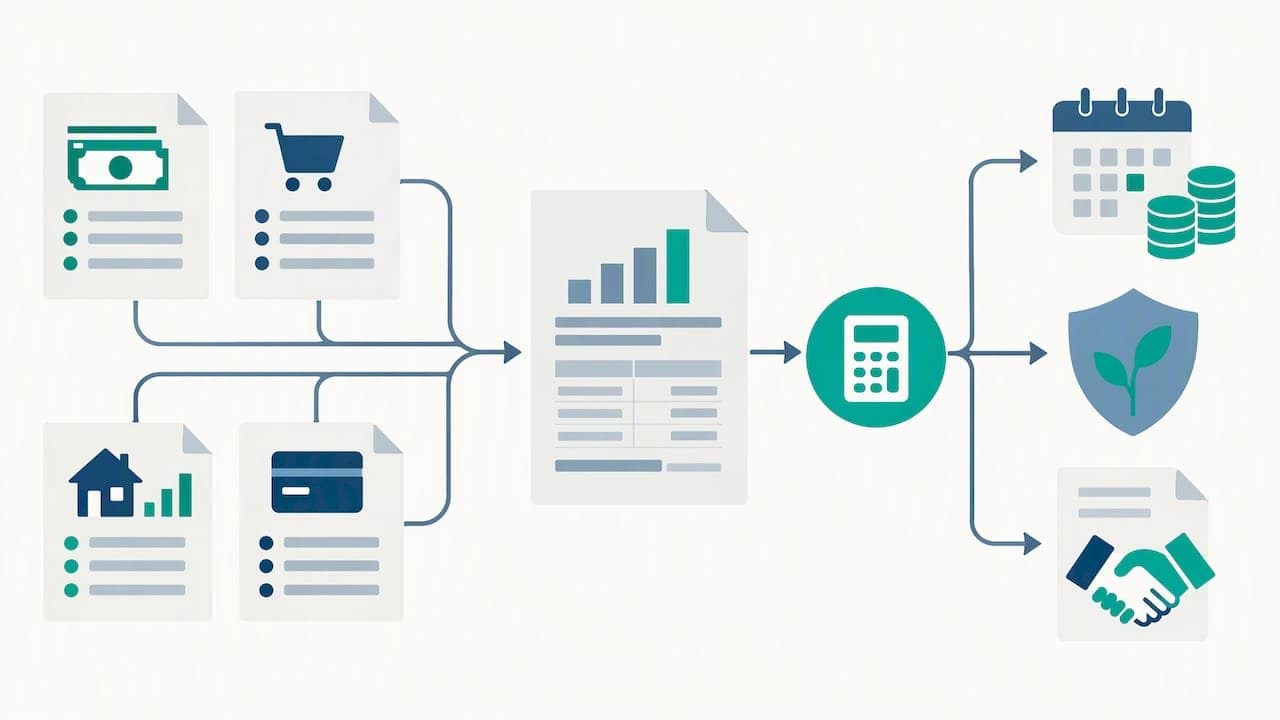
That is why we do not treat a Form 433-A as something to fill out quickly to get the IRS off the phone. We review the full picture first: what you earn, what you truly need to spend, what the IRS will count as an asset, and which resolution fits. Sometimes the right answer is a payment plan we can structure so it does not collapse. Sometimes it is an Offer in Compromise. Sometimes it is fixing unfiled returns first so the rest can move.
Our experience is that the taxpayers who feel most in control are the ones who disclose accurately and on a plan, not the ones who disclose the most or the least. Think of a collection hold as pressing pause, not delete: it buys you time to build the right proposal, but the debt remains until it is resolved.
— Joe
Work with a CPA before you sign
If a revenue officer has asked for a financial statement, or you are about to file a Form 433-A for an installment agreement or an Offer in Compromise, have a licensed CPA look it over first. Joe Mastriano, CPA, represents taxpayers before the IRS on audits, collections, installment agreements, and the Offer in Compromise. You can see how engagements are handled on our fee structure page, or review everything we do on the services page. Your first step can be a consultation with Joe about your situation.
FAQ
What does a financial disclosure include?
For collection purposes, it includes your income, monthly living expenses, bank and investment accounts, real estate, vehicles, digital assets, debts, and any business assets. You support the figures with documents such as pay stubs and bank statements. You sign the statement under penalty of perjury.
Can I legally opt out of paying federal taxes by refusing to disclose?
No. Refusing to provide financial information does not remove the obligation to pay. It can lead to enforced collection, including liens and levies. If you cannot pay in full, the better move is to disclose accurately and ask for a payment plan or another collection alternative.
How does the IRS define disclosure?
The IRS defines disclosure as the release of return or return information, which Section 6103 of the Internal Revenue Code generally prohibits. Exceptions include your written consent, a court order, and limited sharing with state agencies for tax administration.
What is the IRS voluntary disclosure program for foreign assets?
The IRS Criminal Investigation Voluntary Disclosure Practice lets taxpayers who willfully failed to comply come forward to resolve it and limit criminal exposure. It has required a six-year disclosure period and significant penalties, and the IRS has proposed changes. Speak with a CPA or tax attorney before you submit anything.
Do I have to send a financial statement with my Collection Due Process request?
Not with the initial Form 12153 request. Sending Form 433-A or 433-B early is still wise, because Appeals can evaluate payment alternatives from the start.
Sources
- Publication 1854: How to prepare a Collection Information Statement (Form 433-A)
- Publication 5059: How to prepare a Collection Information Statement (Form 433-B)
- Form 433-F
- Form 433-B (Rev. 6-2026)
- Form 12153 instructions
- IRS Collection Financial Standards
- IRS Local Standards: Transportation
- IRS Criminal Investigation Voluntary Disclosure Practice
- IRS seeks public comment on Voluntary Disclosure Practice proposal
- Taxpayer Advocate Service: proposed Voluntary Disclosure Practice changes
- IRS disclosure laws
- FAQs on taxpayer control over tax information
- Treasury Decision 9027