
File a complete, signed return and send back the IRS response form by the date on your CP3219N, and you typically replace the substitute return and cut the assessed liability. Filing lets you claim deductions and credits the IRS left out. If you cannot pay the balance, you still have installment agreements, an Offer in Compromise, and penalty abatement to work with.
TL;DR:
- An SFR counts reported income but usually omits business expenses, itemized deductions, credits, and dependents, so verify records before preparing your return.
- Letter 3219 gives you 90 days to petition Tax Court, or 150 days abroad, and the IRS cannot extend the deadline.
- You may be able to file electronically for periods within the past two years; older returns generally require mailing the signed return and response form.
- Your filing starts the assessment period, which lasts three years for tax shown, but penalties need separate relief requests and collection follows a different timeline.
- An Offer in Compromise is realistic only if you can show you cannot pay the full balance; wait until your return is processed before applying.
Table of Contents
- What is a substitute for return and how does the IRS create one?
- How do you replace the SFR with an accurate return?
- What do CP3219N, Letter 3219, and the Tax Court deadline mean for you?
- How does filing a delinquent return affect assessments, penalties, and time limits?
- What relief options exist if you cannot pay after replacing the SFR?
- What does a CPA experienced in IRS resolution actually do?
- Joe’s checklist: what I tell clients to do the day an SFR notice arrives
- How can we replace your SFR and negotiate relief?
- FAQ
- Sources
What is a substitute for return and how does the IRS create one?
A substitute for return (SFR) is a tax return the IRS prepares for you under IRC §6020(b) when you fail to file. The agency builds it from information returns that third parties send in, such as W-2s and 1099s. It does not ask you what you actually spent or earned.
That is why an SFR almost always costs you more than a return you file yourself. The IRS explains that filing your own return is in your best interest because it lets you claim exemptions, credits, and deductions the SFR omitted.
Here is what the IRS typically builds into an SFR and what it leaves out:
- It counts every dollar of reported wages, interest, and contractor income.
- It applies the least favorable filing status, with no dependents.
- It skips business expenses, itemized deductions, and credits unless third-party data supports them.
- It produces a proposed assessment, which arrives as a CP3219N or a notice of deficiency.
Think of the SFR as a placeholder the IRS expects you to correct. Our team sees the same pattern again and again: income gets counted in full, and the offsetting costs never show up. If you want a deeper walkthrough, we cover it in our guide on how to replace an IRS substitute for return before the IRS deadline.
How do you replace the SFR with an accurate return?
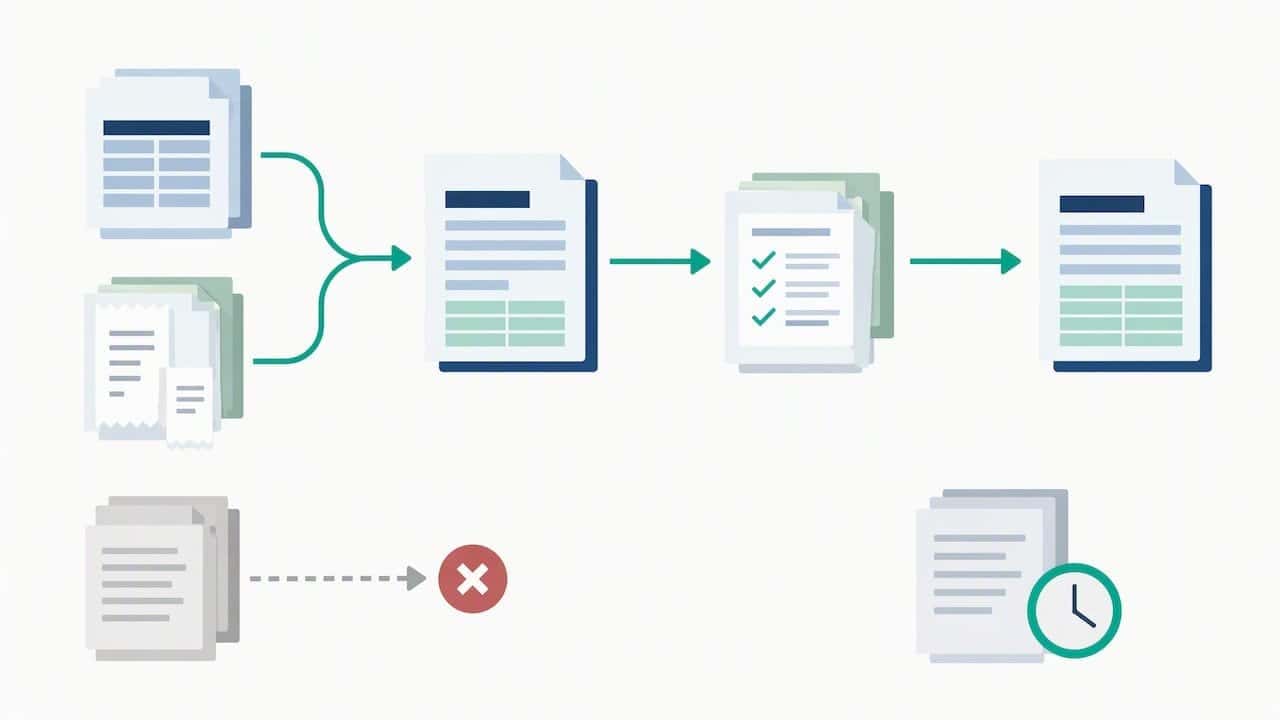
Work through these steps in order, and keep the notice in front of you the whole time.
- Match the notice. Confirm that your name, SSN or TIN, and the tax year on your return match the CP3219N exactly.
- Gather your records. Pull W-2s, 1099s, bank statements, mortgage interest forms, and receipts for deductible expenses. Request IRS wage and income transcripts if documents are missing.
- Prepare the return honestly. Claim every legitimate deduction and credit the SFR left out, and use the correct filing status.
- Decide how to file. Per the IRS, you may be able to e-file if the tax period falls within the past two years. Older returns generally must be mailed with the response form and the envelope the IRS provided.
- Sign it. An unsigned return is not a valid return. On a joint return, both spouses must sign.
- Attach the response form and support. Include the CP3219N response form and any supporting documents with your mailing.
- Keep proof. Copy everything, and send it by a method with delivery tracking.
Pro Tip: Mail your return well before the date on the notice and keep the tracking receipt in your records, because the IRS treats the notice date as firm.
Two quick cautions. Do not guess at numbers you cannot support, since an inaccurate return can create a new problem on top of the old one. And do not wait until you have a perfect file of records. A return built from transcripts, then amended later, usually beats a late one.
What do CP3219N, Letter 3219, and the Tax Court deadline mean for you?
CP3219N and Letter 3219 are statutory notices of deficiency. They tell you the IRS proposes to assess more tax and give you a right to challenge that proposal. According to the Taxpayer Advocate Service, Letter 3219 gives you 90 days (150 days if you are outside the U.S.) to petition the U.S. Tax Court, and the IRS cannot extend that deadline.
The practical rules look like this:
- If you agree with the proposed assessment, you sign and return the response form and pay or explore payment options.
- If you disagree, you file your own return by the date on the notice so the IRS can reconsider the figures.
- The notice is sent to your last known address, so a missed or misdirected letter does not stop the clock.
- If you let the window close, you generally lose the Tax Court option, and the IRS can move forward with the proposed assessment.
The Taxpayer Advocate Service also explains the petition process for the related CP3219A notice, including possible fee waivers. The lesson is simple: read the date on the notice the day it arrives, and calendar it. Everything else, including payment plans, depends on that date not slipping.
How does filing a delinquent return affect assessments, penalties, and time limits?
Filing your own return does not just erase the SFR. It changes what the IRS can assess and when.
According to an IRS memorandum on SFR assessments, the IRS may assess additional tax shown on delinquent returns you file after an SFR assessment, and assessment rules differ from the collection statute of limitations. The same memorandum states that the IRS executing a substitute return does not start the normal assessment period, while your own filing starts the three-year assessment clock for amounts shown on that return.
Your own filing, not the IRS’s substitute, is what starts the three-year clock on the amounts shown on your return.
Keep these points in mind:
- A return you file can produce a higher or lower tax figure than the SFR, so the IRS may assess new amounts, not just adjust old ones.
- Failure-to-file penalties under §6651(a) can still apply, and in some cases the fraudulent failure to file penalty under §6651(f) may be asserted.
- Filing does not automatically remove penalties already assessed. You request relief separately.
- Assessment timing and collection timing follow different rules, so do not assume one clock covers both.
Our guide to the IRS statute of limitations explains how these clocks interact. And if you have wondered why this matters beyond one tax year, our piece on why you should file unfiled returns covers the bigger financial picture.
What relief options exist if you cannot pay after replacing the SFR?
Once the correct figure is on your account, you can choose a way to deal with the balance.
- Installment agreement. This is the usual starting point. You pay over time, and the IRS offers payment plans you can request after your return is processed. See how we set up IRS installment agreements.
- Offer in Compromise. This settles the debt for less than you owe, but it is realistic only if you can show you cannot pay the full tax. Our page on the IRS Offer in Compromise explains the types of offers.
- Penalty abatement. You argue reasonable cause, or qualify through a clean compliance history. Our page on failure-to-file penalty abatement shows when first-time relief may apply.
- Disagreement routes. If you dispute the assessment, you can respond to the notice, request an appeal, or petition Tax Court within the statutory window.
Pro Tip: Do not file an Offer in Compromise before your return is processed and the balance is stable, because an offer built on shifting numbers tends to fail.
What does a CPA experienced in IRS resolution actually do?
Professional help matters most when the deadline is close or the numbers are messy. A CPA who handles IRS cases can take over the parts that trip people up:
- Prepare and sign accurate delinquent returns that match the IRS notice, with supporting documents assembled.
- Negotiate installment agreements and prepare Offer in Compromise packages.
- Request penalty abatement and file appeals or Tax Court petitions when appropriate.
- Speak to the IRS for you, so you are not the one answering collection calls.
At our firm, Joe Mastriano, CPA, handles IRS matters, and our relevant services include IRS delinquent returns, Offers in Compromise, installment agreements, and representation before the IRS and other authorities.
Joe’s checklist: what I tell clients to do the day an SFR notice arrives
When a client calls me with an SFR notice, we start with the same short list:
- Match the notice data, prepare the accurate return claiming the credits the IRS missed, sign it, and include the response form.
- Mail with delivery confirmation when required, or e-file when allowed, and never let the IRS deadline pass.
- Call a qualified CPA early if penalties, a payment plan, or statute-of-limitations questions are in play.
The pitfall I see most is waiting for a perfect file of records. Filing a supportable return on time beats a perfect one filed late.
— Joe
How can we replace your SFR and negotiate relief?
We prepare and file delinquent returns properly, handle CP3219N responses, and negotiate installment agreements and Offers in Compromise. Our IRS delinquent returns service puts a CPA on your case before the deadline runs out.

Ready for a next step? Start with a free evaluation through our consultation page and we will review your notice with you.
This article is general information, not a substitute for advice from a qualified financial advisor. Consult a qualified financial professional about your own circumstances before acting on anything here.
FAQ
How do I file back taxes to replace an SFR?
Prepare an accurate, signed return for each unfiled year, matching the details on your IRS notice. Under IRS guidance, you may e-file if the tax period is within the past two years. Older returns generally go by mail with the response form.
What happens if I miss the 90-day deadline?
You generally lose the right to petition the U.S. Tax Court, and the IRS can proceed with the proposed assessment. You can still file a return and pursue payment or relief options, but your leverage is weaker. Act on the notice date, not on the date you feel ready.
Will filing my own return lower what the IRS says I owe?
Often, yes, because your return can include deductions, credits, and exemptions that the SFR omitted. The IRS says filing is in your best interest for that reason. The outcome depends on your records, so the final figure can also go up in some cases.
Can penalties be removed after I replace the SFR?
Filing does not automatically remove penalties already assessed. You request relief separately, usually through reasonable cause or first-time abatement if your history qualifies. We explain these options in our overview of IRS penalty relief.