
The IRS does not set a special rate for installment agreements. Your plan balance is charged the standard underpayment rate, which is 7% per year for individuals in the fourth quarter of 2026, compounded daily. That rate is reset every quarter, so the figure you see today is not a promise about next year. A plan also carries a monthly penalty and, in most cases, a setup fee. This guide shows what each of those costs and how to keep the total down.
TL;DR
- Interest: 7% per year for individuals from October 1 to December 31, 2026. It compounds daily and the IRS can change it every quarter.
- Penalty: The failure-to-pay penalty is generally cut to 0.25% per month while an approved plan is in effect. It is separate from interest.
- Setup fees: As of the IRS fee table updated March 3, 2026, a long-term plan costs $29 online with direct debit, $69 online without it, and $107 if you apply by phone, mail or in person. Low-income taxpayers may qualify for a waiver or reduction.
- The clock: Interest has been running since the original due date, not since the plan was approved. Pay what you can up front.
Table of Contents
- The current rate and how the IRS sets it
- How the interest is actually calculated
- Interest is not the only charge: the penalty
- Installment agreement fees
- Why a short-term plan can cost less
- Seven ways to lower the total cost
- What the plan does and does not protect you from
- Our perspective: the rate is rarely the real problem
- When to get professional help
- Talk to a CPA before you sign
- FAQ
- Sources
The current rate and how the IRS sets it
For individuals, the IRS builds the underpayment rate from the federal short-term rate plus 3 percentage points. It announces the new rate before each calendar quarter. The IRS quarterly rate table shows the 2026 underpayment rate at 7% in the first quarter, 6% in the second, and 7% in the third and fourth.
| 2026 quarter | Underpayment rate (individuals) |
|---|---|
| Q1 (Jan–Mar) | 7% |
| Q2 (Apr–Jun) | 6% |
| Q3 (Jul–Sep) | 7% |
| Q4 (Oct–Dec) | 7% |
Two points are worth understanding.
The rate floats. If you sign a plan today, the 7% is not locked in. When a later quarter’s rate moves, the new rate applies to your remaining balance from that date forward. Past quarters keep the rate that applied at the time, which is why an IRS account transcript can show different rates for different periods.
Balance size does not change the rate. You may see claims that owing more than $10,000 triggers a different rate. For individuals it does not. The $10,000 figure in the IRS table belongs to a corporate overpayment category and has nothing to do with your plan. What a larger balance can change is how you apply, what documentation the IRS asks for, and whether the IRS has already started collection.
How the interest is actually calculated
The IRS charges interest on the unpaid balance, and that balance can include tax, penalties, additions to tax and interest already accrued. Because the interest compounds daily, each day’s charge is calculated on the previous day’s balance plus the interest added to it.
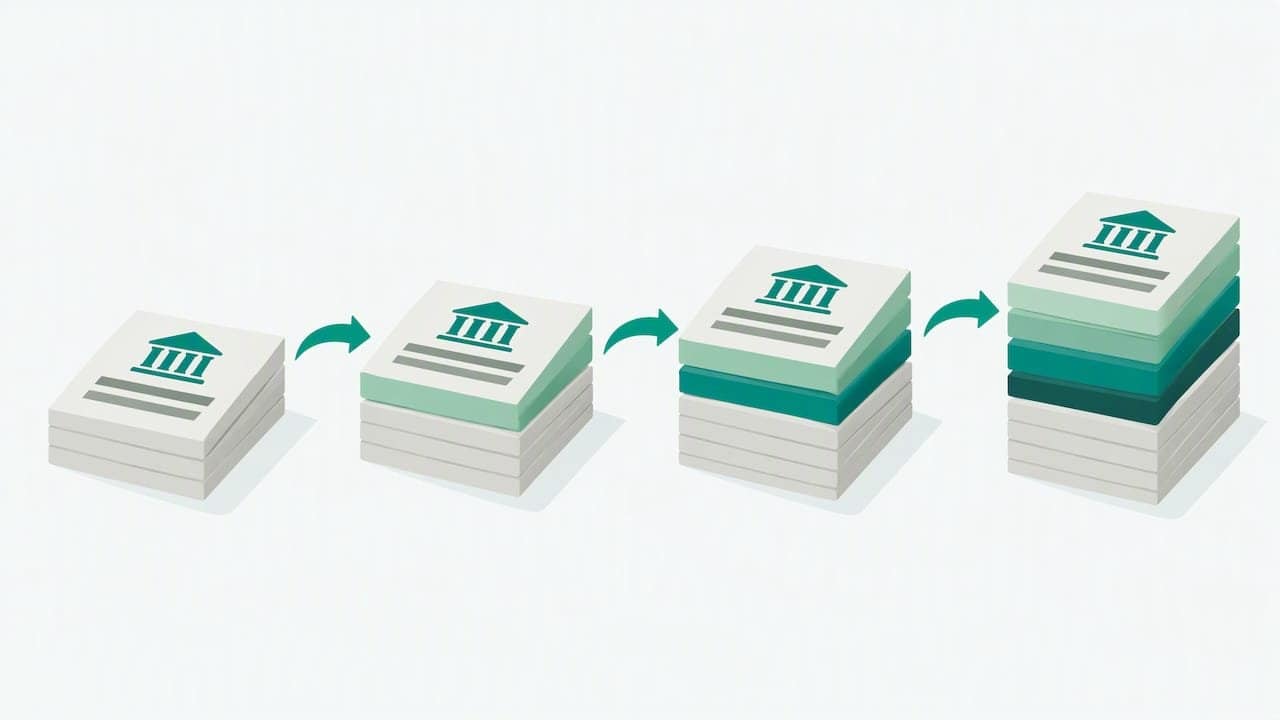
The interest clock does not start when the IRS approves your plan. It generally runs from the original due date of the return, and an extension to file does not push back the payment due date. A plan is a way to pay over time. It does not erase the interest that built up before you signed.
A worked example
These numbers are our own simple arithmetic, not an IRS quote. Say you owe $15,000 in tax and the rate is 7%.
- Interest in the first month is about $87 ($15,000 × 7% ÷ 12), before daily compounding.
- The 0.25% monthly penalty on the same $15,000 of unpaid tax is about $37.50.
- So in month one, carrying the balance costs roughly $125 in addition to your payment.
As each payment reduces the balance, both charges shrink. A real transcript will differ because compounding, the penalty’s base and rate changes all move the numbers. This is why we ask for your actual account transcript before we estimate what a plan will cost you.
Interest is not the only charge: the penalty
Most people focus on the interest rate and overlook the penalty, which is a separate charge. Under the IRS collection procedural guidance, the failure-to-pay penalty is normally 0.5% of unpaid tax for each month or part of a month, up to 25%. While an installment agreement is in effect, the rate is generally 0.25% per month.
There are exceptions. If the IRS has issued a final notice of intent to levy, the penalty can rise to 1% per month after the 10-day period. Whether the reduced rate applies to you depends on your account and notice history. If you have received a final notice, read it closely before you do anything else. Our page on IRS letters and notices explains how to tell which notice you have.
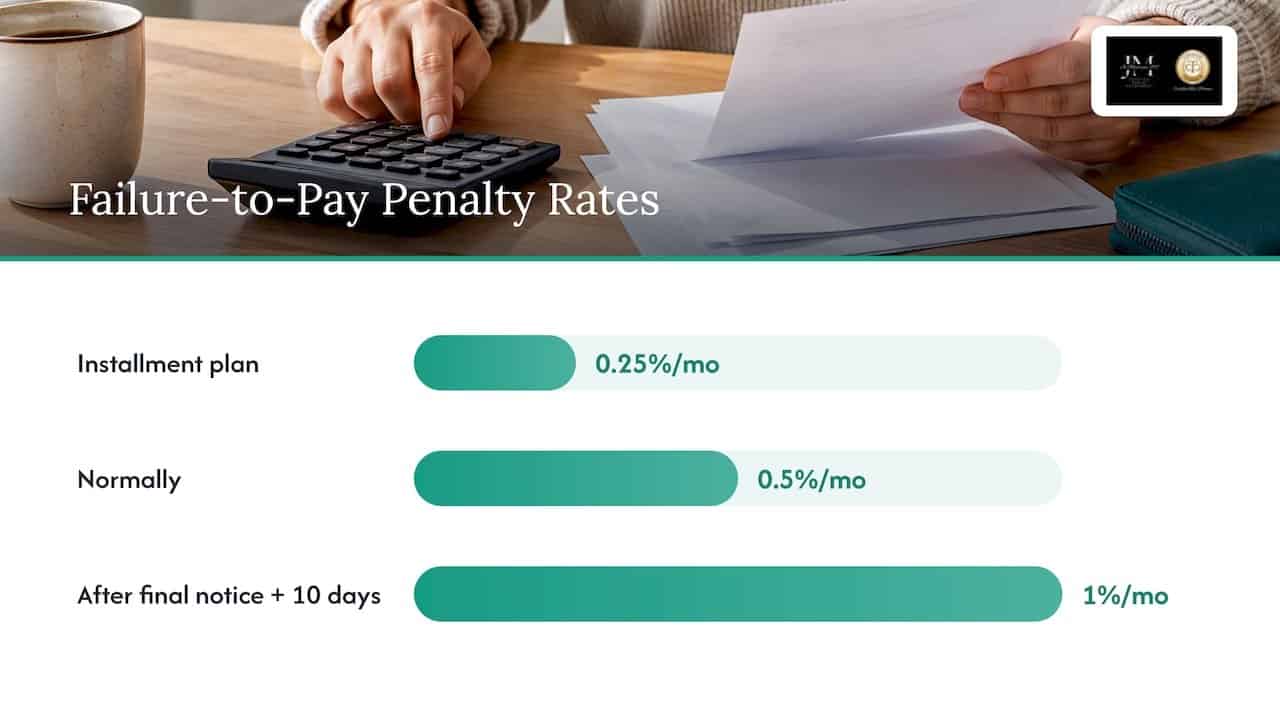
In short, your real annual cost of carrying a balance on a plan is the interest rate plus the penalty rate on the unpaid tax, until the balance is gone.
Installment agreement fees
The other cost is the setup fee. The IRS’s payment plan page, last updated March 3, 2026, lists these amounts:
| Plan type | How you apply | Setup fee |
|---|---|---|
| Short-term plan (180 days or less) | Online, phone, mail or in person | $0 |
| Long-term, direct debit | Online | $29 |
| Long-term, direct debit | Phone, mail or in person | $107 |
| Long-term, no direct debit | Online | $69 |
| Revise or reinstate an existing plan | See IRS page | $6 |
Low-income taxpayers may have the fee waived or reduced, subject to IRS conditions. Card fees are separate from IRS setup fees, so check them if you plan to pay any part of the balance by card.
The direct debit discount is real, but do not choose it only to save $40. A payment that repeatedly overdrafts your account can put the whole agreement at risk. Pick an amount and a due date you can sustain, and keep funds aside for current-year taxes.
Why a short-term plan can cost less
If you can pay within 180 days, the setup fee is $0. Interest and the penalty still accrue until the balance is paid, but a shorter timeline means fewer months of both. Before you commit to a 72-month plan, check whether a combination of savings, a short-term plan and a smaller long-term balance would cost less overall.
We cover the monthly payment rules, qualification tests and application steps in our guides to IRS payment plans and how to save on fees and choosing the right payment plan option.
Seven ways to lower the total cost
- Pay as much as you can before the plan starts. Every dollar paid up front stops interest and penalty on that dollar.
- File every required return. The IRS expects you to be current on filing. If returns are overdue, deal with them first. Our delinquent returns service exists for exactly that situation.
- Pay future taxes on time. New balances can sink a plan on an old one. This matters most for business owners with payroll or estimated taxes.
- Never miss a payment. A missed or incomplete payment can lead to cancellation and additional charges.
- Send extra when you can. Extra payments shorten the plan and cut total interest.
- Ask about penalty relief. If you have a reasonable-cause or first-time situation, abatement removes penalty and the interest that was charged on it. See our overview of IRS penalty relief options.
- Check whether a different resolution fits. If you cannot realistically pay the full balance, an Offer in Compromise may be worth evaluating.
Note: tip 6 depends on your facts. Penalty relief is not automatic, and the IRS decides on the circumstances you document.
What the plan does and does not protect you from
The plan does not stop the interest or the penalty. The IRS says that until the account is paid in full, interest and penalty charges keep accruing. The CP14IA notice lists your plan terms and warns that late or incomplete payments may cause cancellation.
What the plan does give you is breathing room. The IRS generally does not take enforced collection action while a request is pending or while an approved plan is in effect. Collection protection generally also applies for 30 days after a request is rejected or a plan terminated, and while an appeal is under review. Exceptions exist, and you must keep to the agreement. Think of it as pressing pause on collection, not delete on the debt.
If you have already missed payments, read our page on installment agreement default help before the IRS acts.
Our perspective: the rate is rarely the real problem
We have handled IRS cases for over 45 years, and the question “What is the rate?” comes up on almost every first call. The honest answer is that 7% matters less than three other things.
First, whether you are compliant. We regularly see people who negotiate a good plan and then lose it because a current-year estimated payment was skipped or a return was never filed. A low rate on a plan that defaults is worth nothing.
Second, whether the plan is the right tool. Some clients are better served by an Offer in Compromise, penalty abatement or a hardship status. A plan that you can afford but that takes the full 72 months can cost far more than a negotiated alternative.
Third, whether the payment fits your budget. We set up and maintain installment agreements built to last, because a plan you can keep is the only plan that protects your wages and bank accounts. We also correct mistakes from earlier preparers or large national tax resolution firms, including plans that were set up with payments the client could not sustain.
If your balance is large, you have notices piling up, or business payroll taxes are involved, do not rely on the online tool alone. The online rules are not a substitute for a review of your exact account.
— Joe
When to get professional help
The IRS online application works well for many people with straightforward balances. Get a CPA involved if any of these apply:
- You have received a final notice of intent to levy, or your wages or bank account have been seized.
- You have unfiled returns for one or more years.
- You owe payroll taxes or your business keeps generating new liabilities.
- You cannot afford the payment the IRS formula produces.
- You suspect a better option exists, such as an Offer in Compromise.
If you want to apply on your own, our walkthrough of Form 9465 and IRS payment plans covers the paper route, and our streamlined installment agreement guide explains the simpler qualification path.
Talk to a CPA before you sign
Joe Mastriano, CPA, reviews your IRS situation, including your transcript, notices and filing status, and tells you whether a payment plan is the cheapest and safest route. You can start with a consultation with Joe or look at our full list of tax resolution and representation services. We do not publish fees for these engagements, so ask about cost during the consultation.
FAQ
What is the IRS installment agreement interest rate right now?
For individuals it is 7% per year for the fourth quarter of 2026, from October 1 to December 31. Interest compounds daily. The rate can change each quarter, so the cost of your plan can move while you are paying it off.
Does owing more than $10,000 change the interest rate?
No. Individuals pay the same quarterly underpayment rate whatever the balance. A larger balance can affect how you apply, the documents the IRS wants and whether collection has already started, but not the rate itself.
How much does it cost to set up an IRS payment plan?
A short-term plan of 180 days or less has a $0 setup fee. A long-term plan costs $29 online with direct debit, $69 online without it, and $107 by phone, mail or in person with direct debit. The fee may be waived or reduced if you are low-income and meet the IRS conditions.
Do I still pay penalties on an installment agreement?
Yes. The failure-to-pay penalty generally drops to 0.25% per month while an approved plan is in effect, but it keeps accruing until the balance is paid. If the IRS has issued a final notice of intent to levy, the rate can be higher, so check your notice history.
Can I lower the interest I owe?
You cannot negotiate the rate, but you can reduce what it applies to. Pay down the balance early, request penalty abatement if you qualify, and keep every payment and filing on time.
Sources
- Interest rates remain the same for the fourth quarter of 2026 (IRS)
- Quarterly interest rates (IRS)
- Interest (IRS)
- Collection procedural questions (IRS)
- Payment plans; installment agreements (IRS)
- Understanding your CP14IA notice (IRS)